The new pitch is everywhere: build an AI agent and let it run your marketing. Fair. The tools are getting easier to buy and easier to hand to non-technical teams. OpenAI is now selling workspace agents for business users and is also publishing a business leader’s guide to working with agents. Their release notes spell out that the product is meant to connect across internal sources and take multi-step action. Source.
That does not mean your first move should be “make it write more content.” That is how you end up with polished junk and a team that trusts the wrong output.
If your agent cannot survive a reporting task, do not let it near your brand voice.
Where marketing teams should actually start
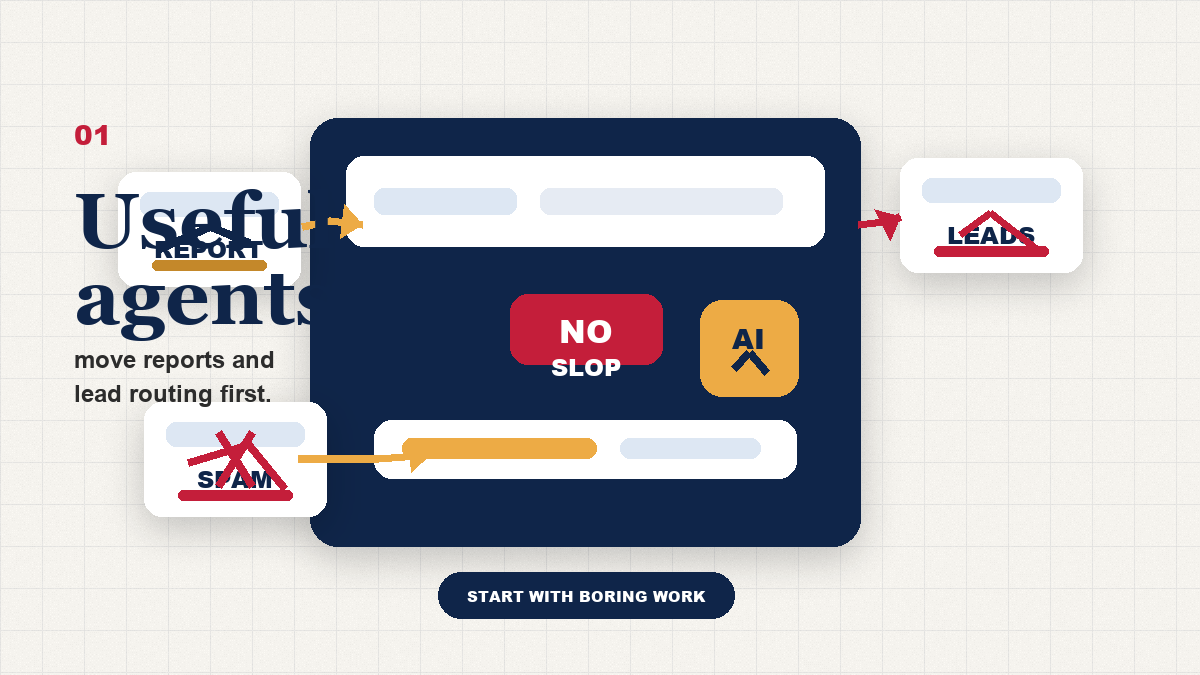
Start with the chores that are annoying, repetitive, and easy to verify.
- Weekly reporting assembly. Pull source notes, flag missing numbers, and draft the first pass of a client update.
- Lead routing cleanup. Check form fills for missing fields, tag urgency, and tee up the next human action.
- Meeting recap and task capture. Turn a transcript into decisions, owners, and deadlines.
- Internal research packets. Gather source links, competitor notes, and raw material before a strategist touches the brief.
Those jobs have three advantages. They happen a lot. They have obvious inputs. You can spot a bad answer without pretending the machine is a genius.
Why this is the better first use case
Marketing teams usually want an AI shortcut for the most visible work first. Blog posts. social copy. thought leadership. pitch language. The problem is that those are judgment-heavy jobs. A wrong number in a report is a fix. A wrong tone in public can make you look lazy.
OpenAI’s own guide keeps coming back to guardrails, tool access, and human review. That is a clue. The useful question is not, “What can an agent generate?” It is, “What can an agent do without quietly making us dumber?”
A simple test before you automate anything
- Can you define the input? If the task starts with a vague Slack message, you are not ready.
- Can you verify the output fast? If review takes longer than doing it manually, this is theater.
- Is there a clear owner? Every agent needs a human who catches the miss.
- Would a mistake be embarrassing or expensive? If yes, start somewhere quieter.
If a workflow fails those four checks, do not automate it yet. Clean up the workflow first.
One good pilot for a small team
Pick the Monday reporting loop. Most teams already have one. It usually includes a pile of exports, two different definitions of a lead, and one person who knows where all the bodies are buried.
Give the agent one narrow job:
- Collect the inputs from agreed sources.
- Flag missing data and naming mismatches.
- Draft a first-pass summary with open questions clearly labeled.
- Hand it to a human before anything goes to a client or executive.
That is a real productivity gain. It also forces you to fix the messy naming, broken UTMs, and shaky handoffs that were already hurting you. For that cleanup piece, pair this with UTMs Without the Tears.
Where not to use agents first
- Thought leadership. If you outsource the point of view, you do not have one.
- Crisis response. No machine should be the first draft of your apology.
- Client strategy recommendations. The output can help prep. It should not make the call.
- Mass social posting. Congratulations. You built a spam cannon.
The boring setup work nobody wants to hear about
The useful part is not the prompt. It is the plumbing.
- Name the source of truth. CRM, analytics, ad platform, project tracker. Pick one answer per data type.
- Write the exception rules. What happens when data is missing, duplicate, late, or weird?
- Keep an audit trail. Save the source links and the agent’s draft so a human can check the chain.
- Limit the blast radius. Start on internal work before client-facing work.
This is why the shiny-demo version of AI agents feels impressive for five minutes and disappointing by Friday.
The SigServe take
Use agents to reduce admin drag. Use humans to make judgment calls. That line sounds obvious until a team starts asking the machine to write the blog, the emails, the sales follow-up, and the strategy memo because the demo looked fast.
If you want a better content system, do not start with a content robot. Start with clearer proof, cleaner inputs, and a point of view a machine cannot fake. Read Case Studies That Close Deals and LinkedIn Is Demoting Generic AI Content. Here’s the Fix.

Want a sane AI workflow before the hype budget disappears?
We can map the handoffs, pick one useful pilot, and keep your team from turning automation into clutter.